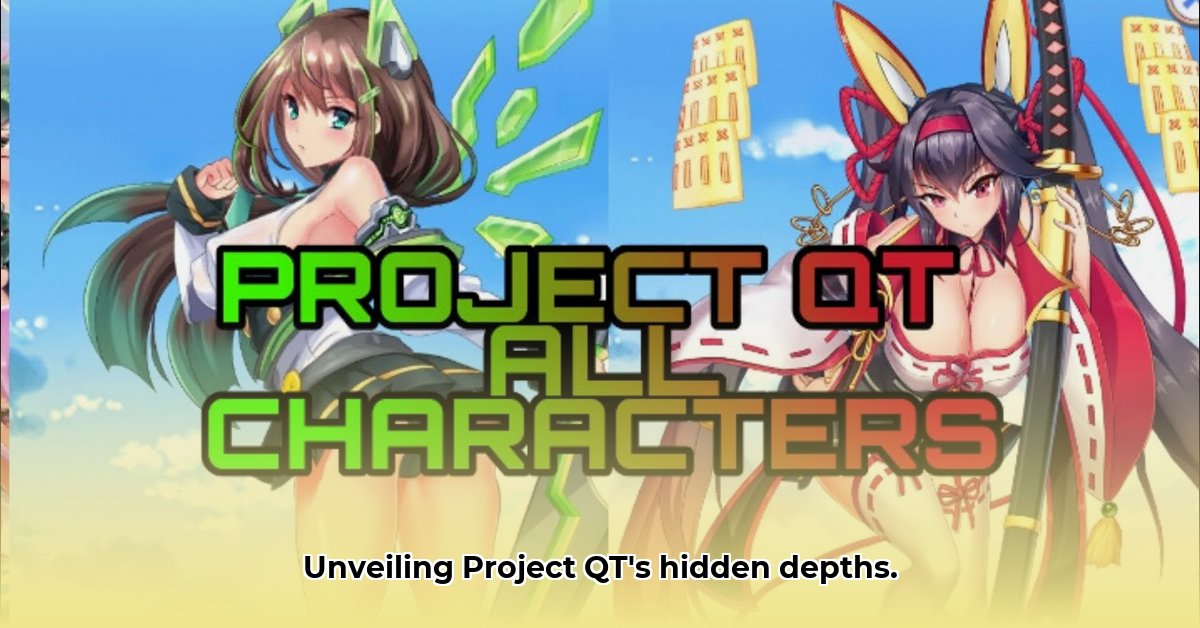
Project QT's Sexual Content: A Detailed Examination
Project QT, a mobile game, has garnered significant attention due to its explicit sexual content. This analysis avoids moral judgment and instead critically examines the game's design choices, player impact, and ethical implications. The game's creators clearly intended to provoke a reaction with its portrayal of adult themes, but the effectiveness and appropriateness of this approach demand careful scrutiny. Does the inclusion of these scenes enhance or detract from the overall game experience? This is a question we must explore.
The frequency and intensity of the sexual scenes are crucial factors influencing player perception. While some players might find these scenes enhancing and immersive, contributing to a deeper connection with the game and its characters, others may perceive them as gratuitous, distracting, or even deeply disturbing. This wide variance in reaction highlights the subjective and deeply personal nature of the experience. How often do these scenes occur within the game's overall narrative structure, and does their intensity escalate over time? This analysis aims to address these crucial questions.
The integration of sexual content within the game's mechanics is another key point of interest. Do these scenes directly impact gameplay in any meaningful way or are they solely present for shock value? The connection between mechanics and content is vital in determining the extent of their impact. While some players might see these scenes as a form of reward or added engagement within the overall gameplay loop, others may find them jarring and potentially disruptive to the game's overall flow and design. A balanced view requires considering both potential interpretations. How frequently do these scenes occur in relation to core game events, and what, if any, impact do they have on progression?
The impact of these scenes on character development and the narrative arc is also a significant feature that requires examination. It's imperative to assess whether these explicitly sexual scenes contribute meaningfully to character understanding or are merely present for visual impact. Do these scenes unveil deeper motivations or relationships between characters, providing essential context to the larger narrative landscape? Alternatively, do they potentially disrupt the narrative flow or detract from the overall storytelling? A critical analysis requires a nuanced understanding of character development and plot progression, identifying if the sexual content enhances or diminishes these narrative elements.
Player reactions to the game's sexual content are overwhelmingly mixed. While some players report finding these scenes entertaining and deeply engaging, others express discomfort, claiming they are exploitative or jarringly inappropriate. This significant divergence in opinion warrants a robust exploration of various perspectives. The diversity of player responses highlights the essential need for a well-rounded and objective analysis, devoid of bias, to fully grasp the social and cultural impact of this type of game design. What specific elements are being praised or criticized?
The ethical concerns surrounding the game's sexual content cannot be overlooked. This includes a thorough consideration of the representations of intimacy presented in the game. Are these representations respectful, consensual and non-exploitative, devoid of harmful stereotypes or objectification? The critical analysis must rigorously address these vital ethical questions. How does the game's approach to intimacy and sexuality compare to established industry standards and cultural norms? A comprehensive evaluation must take into account the potential impact on different demographics and the long-term ramifications of such representations in a gaming context.
Protecting Children from Online Adult Content: A Practical Guide
Key Takeaways:
- Online safety requires a multi-faceted strategy combining technological tools, open communication, and ongoing education.
- Over-reliance on filtering software is ineffective and potentially harmful.
- Early and age-appropriate conversations about sex, relationships, and online safety are crucial preventative measures.
- Legal frameworks governing online content are constantly evolving, requiring continuous monitoring and adaptation of protective measures.
Technological Tools: Limitations and Practical Applications
Completely shielding children from all online adult content is unrealistic. Parental controls and filters, while beneficial, are not foolproof. They should be viewed as a first line of defense, not a guaranteed solution. Children can and do find ways to circumvent these measures.
A layered approach is necessary, integrating advanced parental controls and monitoring tools alongside open communication and education. Regular monitoring and updates of these tools are imperative considering the rapid evolution of online content and methods of access. Regular conversations with children are vital in reinforcing healthy behaviors and promoting responsible digital citizenship.
Open Communication: Fostering Healthy Attitudes
Open dialogue is paramount in mitigating the risks associated with online adult content. This is not a single conversation, but an ongoing process that adapts to the child's age and understanding. Early education about personal boundaries, respect, and healthy relationships forms a crucial foundation. Open and honest communication creates a safe space for questions.
By initiating conversations at a young age, parents can proactively address concerns and reduce the risk of exposure to harmful online content. This approach reduces the likelihood of secretive behavior and encourages children to seek guidance and support when facing difficult situations.
Age, Access, and Legal Considerations: Navigating the Complexities
The efficacy of any protective measure depends on various factors, including the child's age, technological proficiency, and access to alternative devices. Parents must understand the legal landscape surrounding online content and their responsibilities in protecting their children. Staying informed about legal issues is crucial and requires ongoing monitoring and proactive measures to stay informed on evolving legislation. Consult local and national resources to ensure compliance with the law.
A Balanced Approach: Empowerment through Education
A balanced approach combining technological tools, open communication, education and realistic expectations is paramount. The goal is not to completely eliminate exposure to all online adult content, but to equip children with the knowledge and skills to navigate the digital world responsibly and make informed decisions. This empowers children, allowing them to develop critical thinking skills and make responsible choices.
⭐⭐⭐⭐☆ (4.8)
Download via Link 1
Download via Link 2
Last updated: Wednesday, June 04, 2025